Designing Trust in Conversational AI for Ambiguous Human Input
A conversational AI case study about uncertainty, interpretation, and responsible interaction with personal human input.
Human memory is subjective, incomplete, and often contradictory.
Yet conversational AI systems are increasingly used to interpret personal narratives - from journaling to therapy-adjacent tools.
Liquid Data explores how AI can engage with deeply personal memories without presenting its interpretations as truth.
The challenge wasn’t generating output. It was designing appropriate interpretation.
Design Challenge - How do you build a conversational AI that processes memory without claiming to understand it?
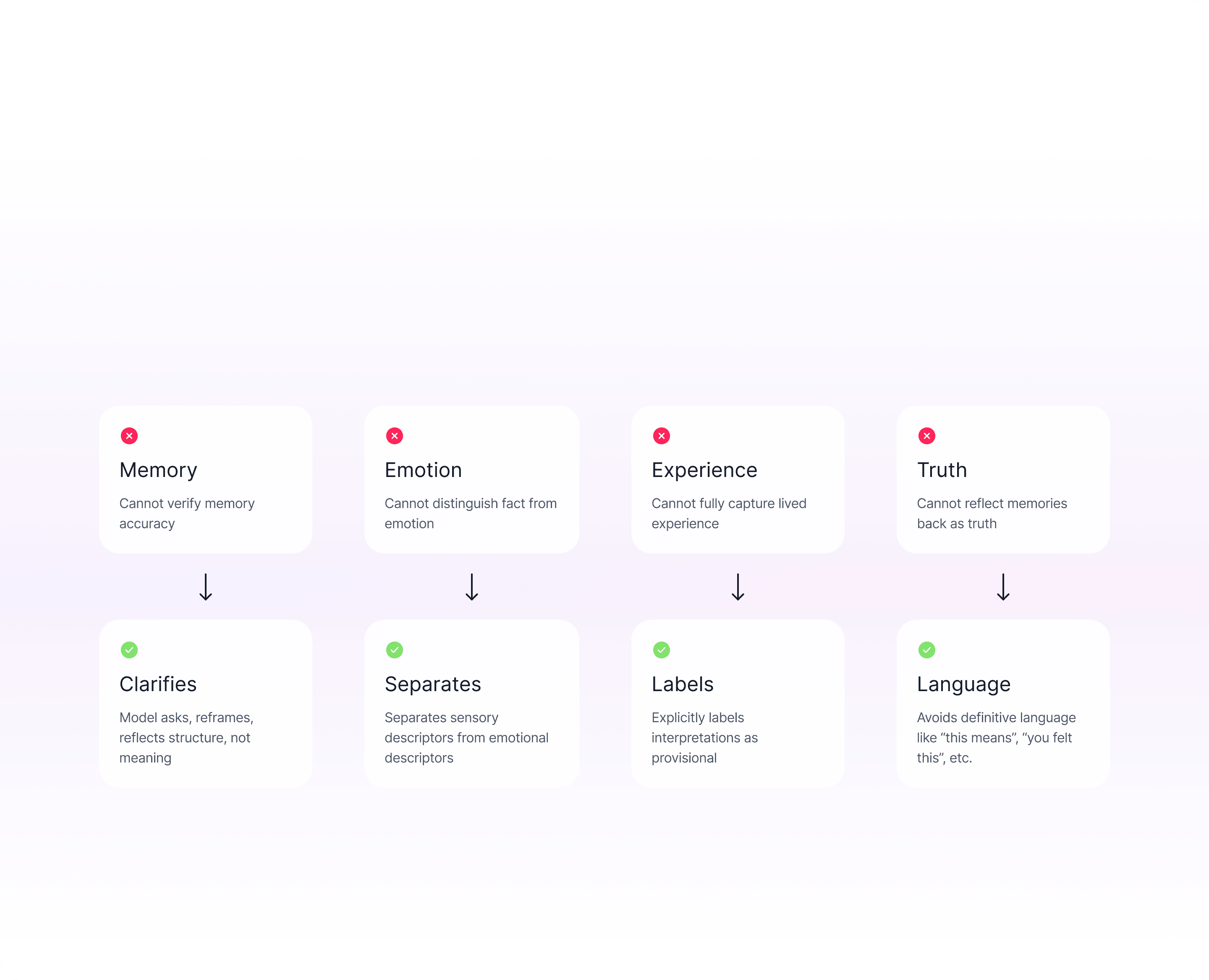
System Constrains
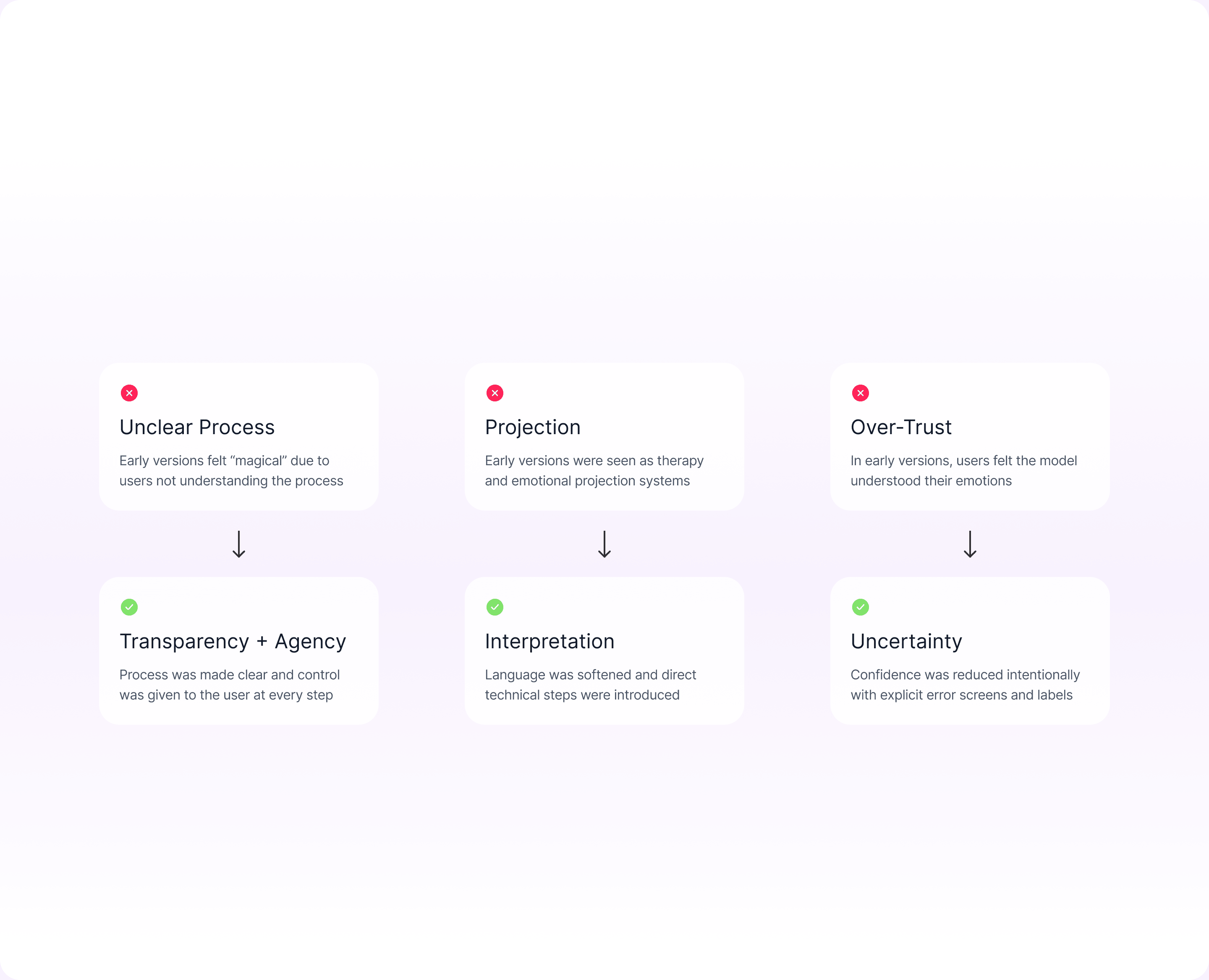
What Broke, What Changed
Transforming conversation from “confession” to “collaboration”
Making uncertainty visible
Trust improved when system felt less certain about outputs
Ambiguity was designed intentionally
Conversational tones helped check model authority
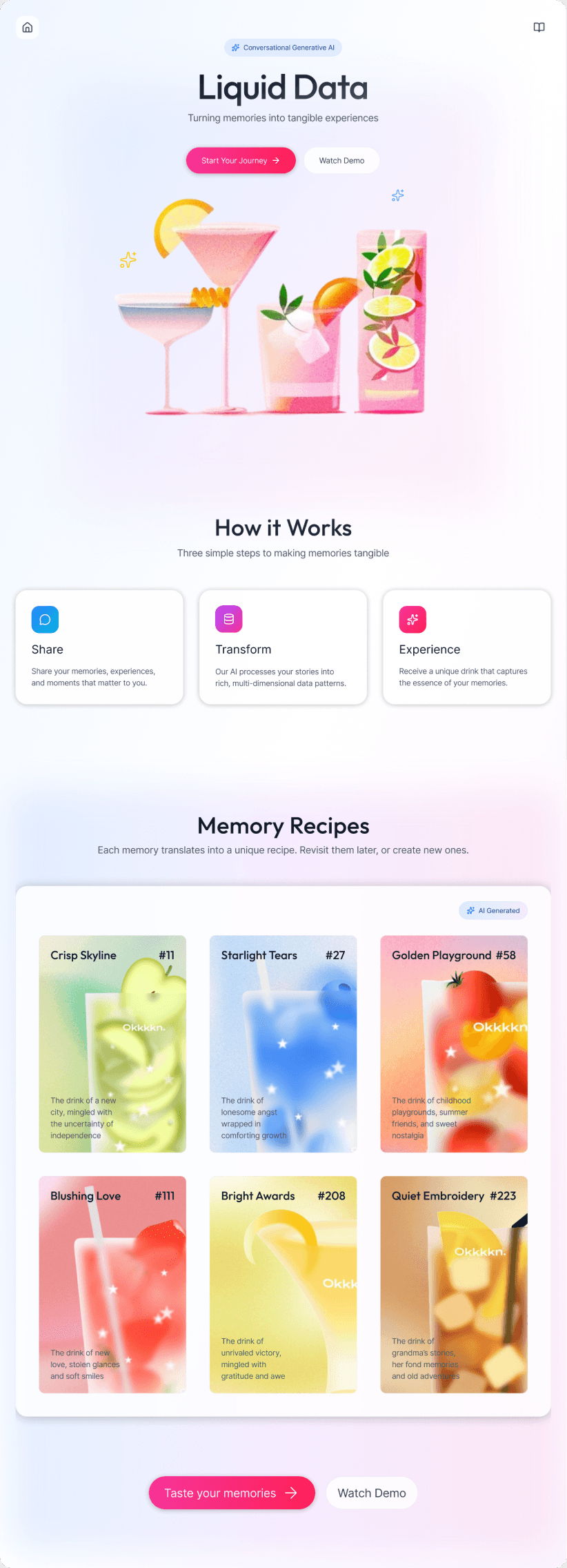
Transparent process description before onboarding to familiarize the users and give them agency over the process
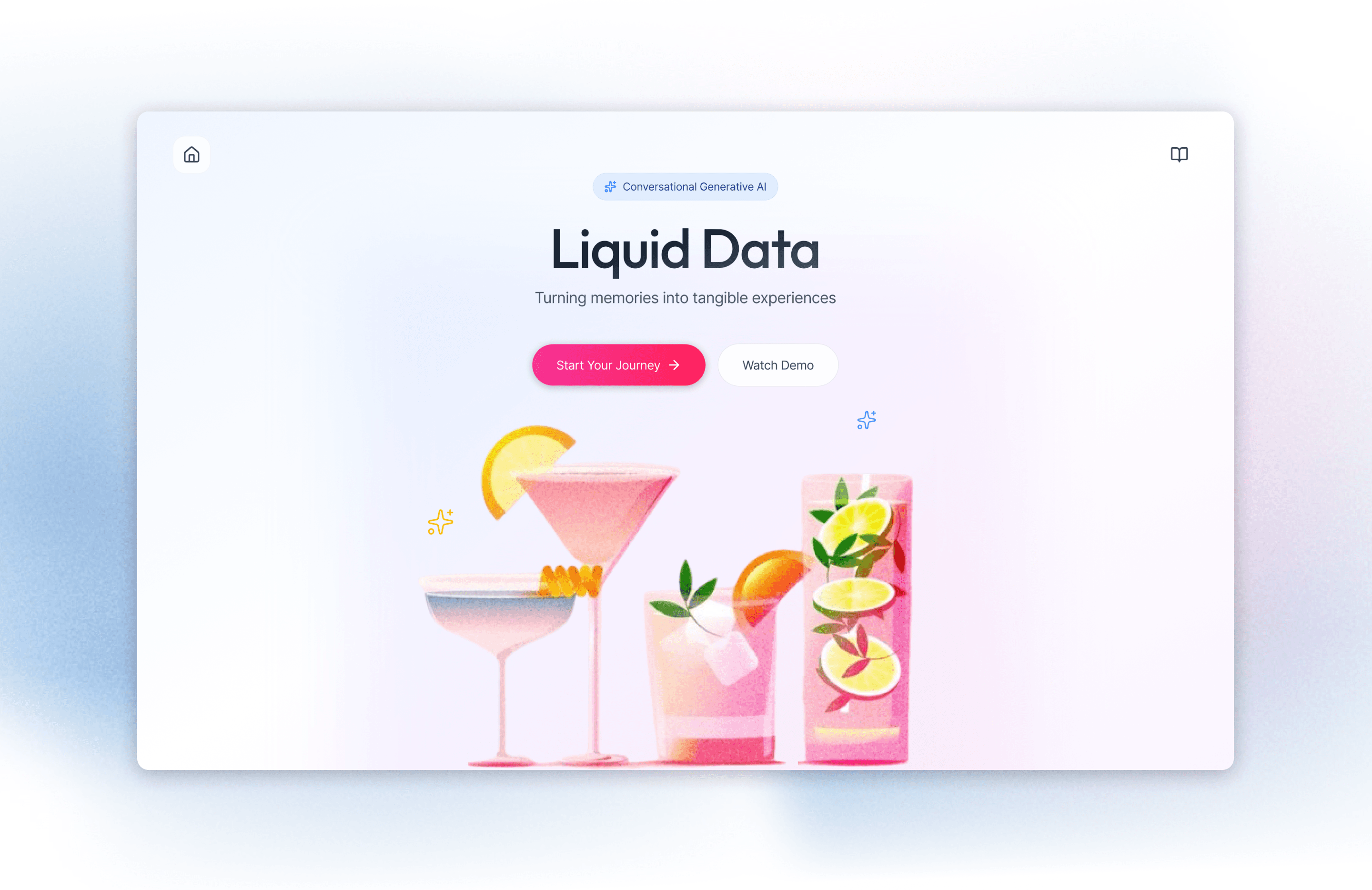
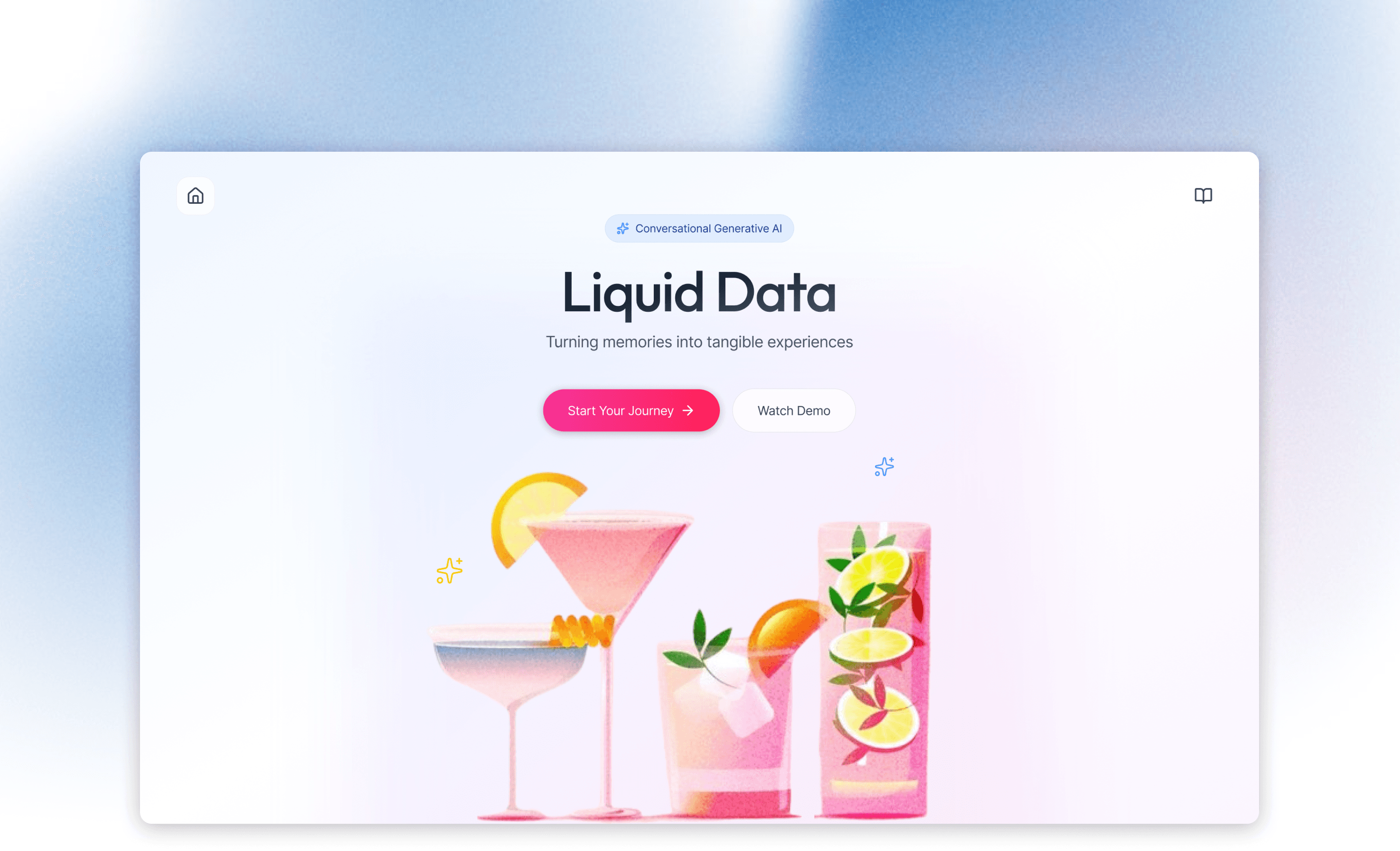
Descriptive, inviting, and warm landing page
Demo → to make the users more comfortable with the system
The AI model used is shown upfront for transparency
Sample output is shown before onboarding for transparency → increasing trust
‘AI Generated’ tag to provide awareness, ensuring no information is hidden from the users
Bold, to the point, clutter-free CTA
Soft boundaries in conversational tone to prevent model from assuming therapeutic authority
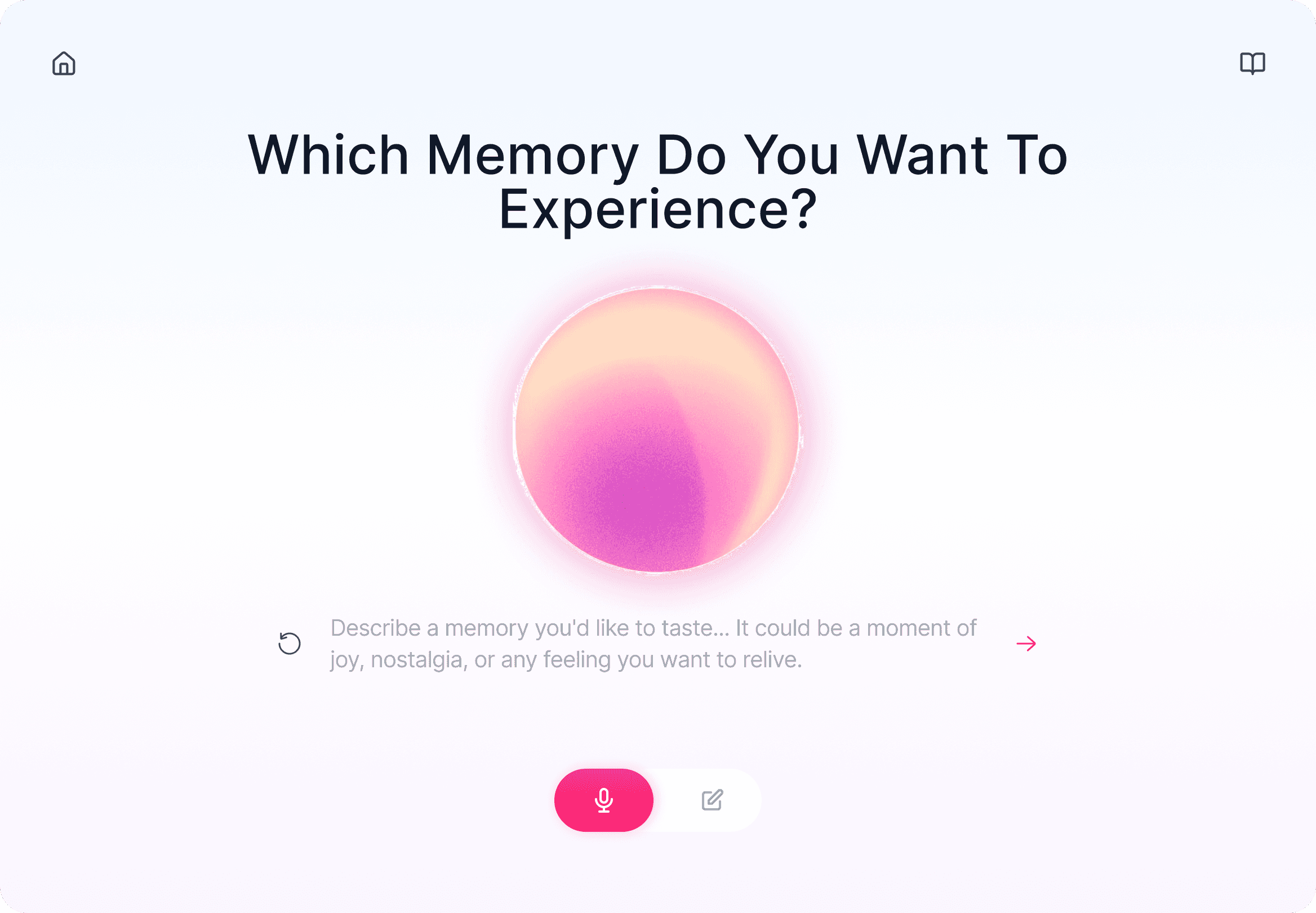
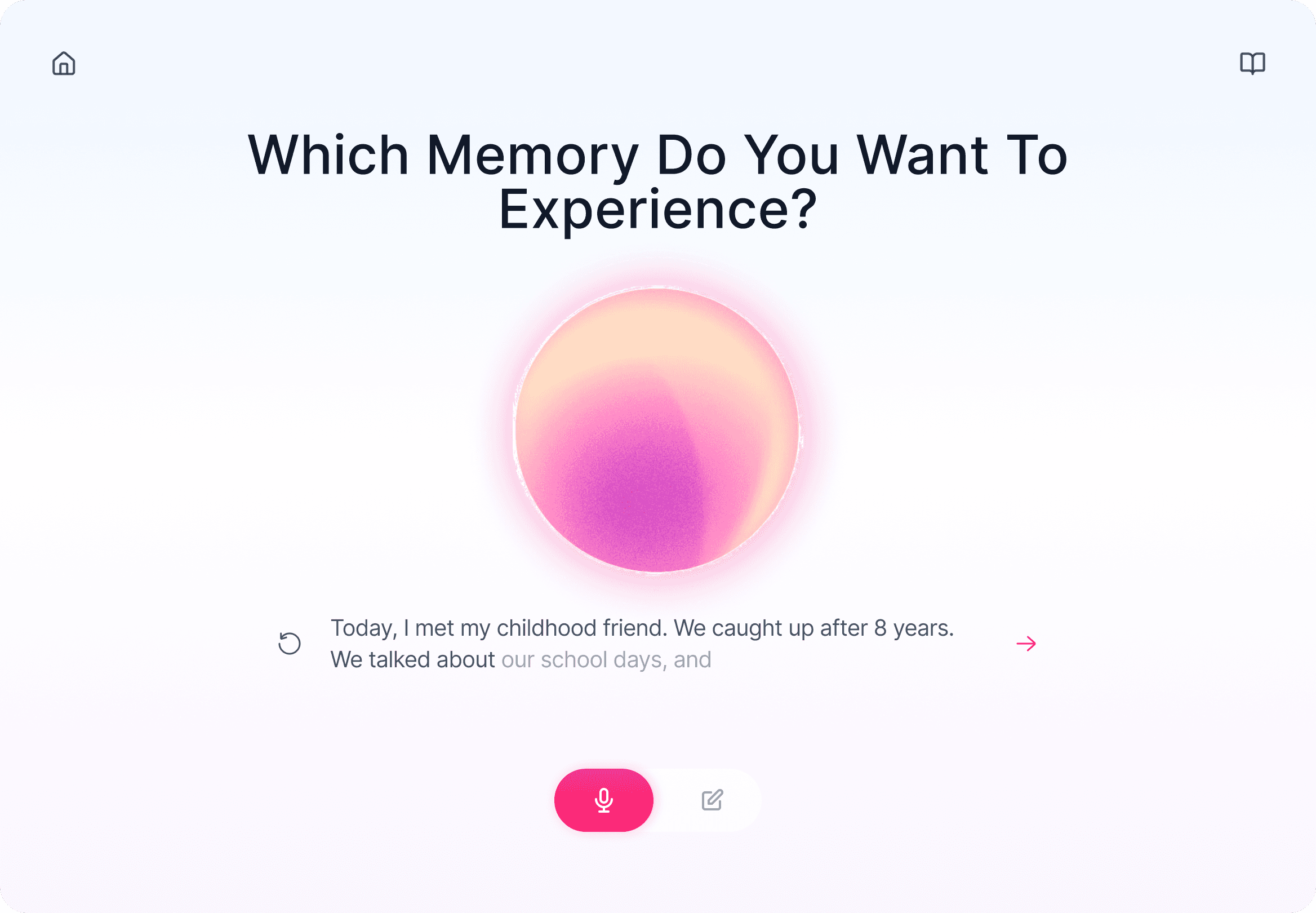
Non-automated input field → agency to users regarding when they want to proceed
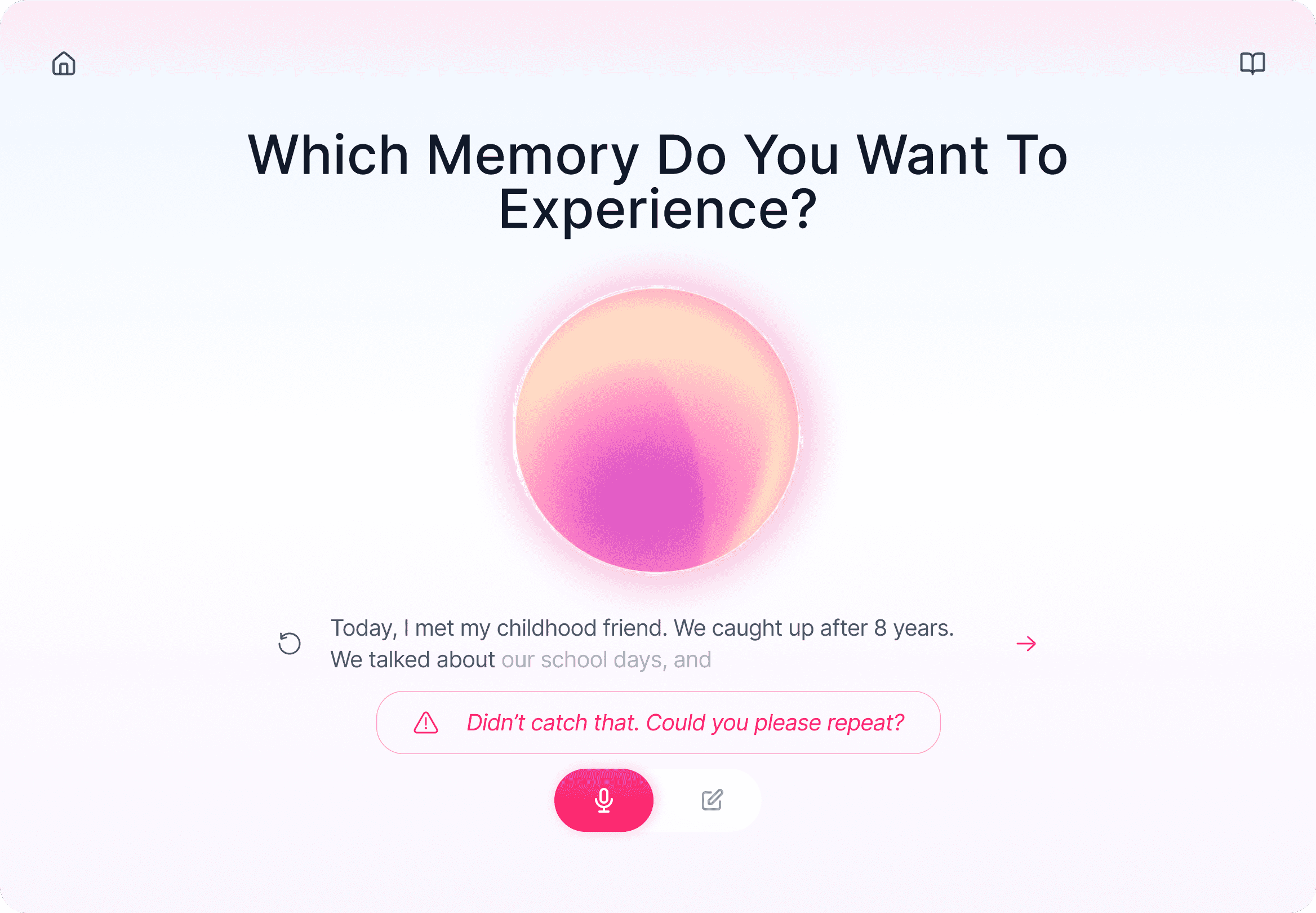
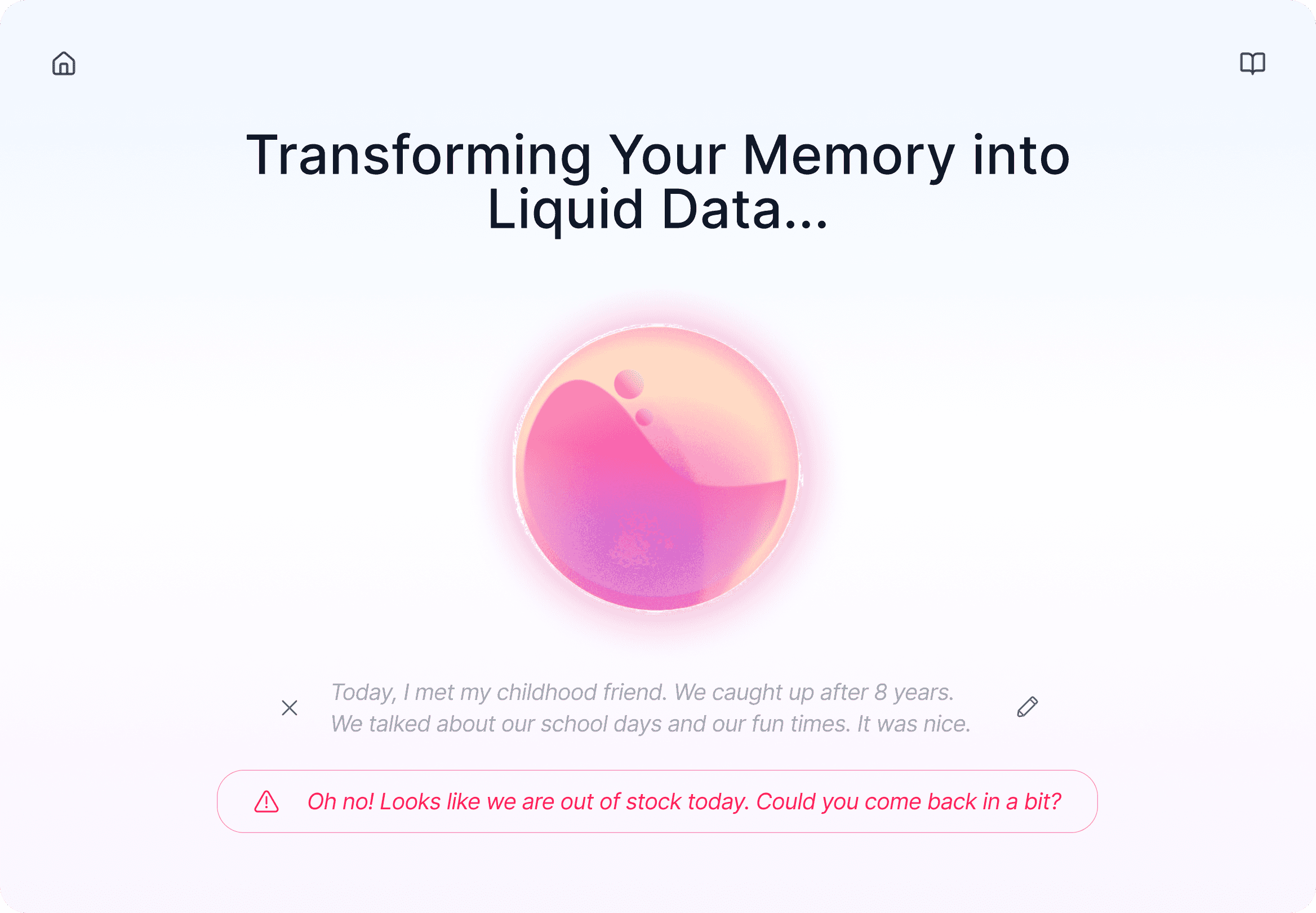
Soft error message for not interrupting flow
Soft error message that sticks to the world-building
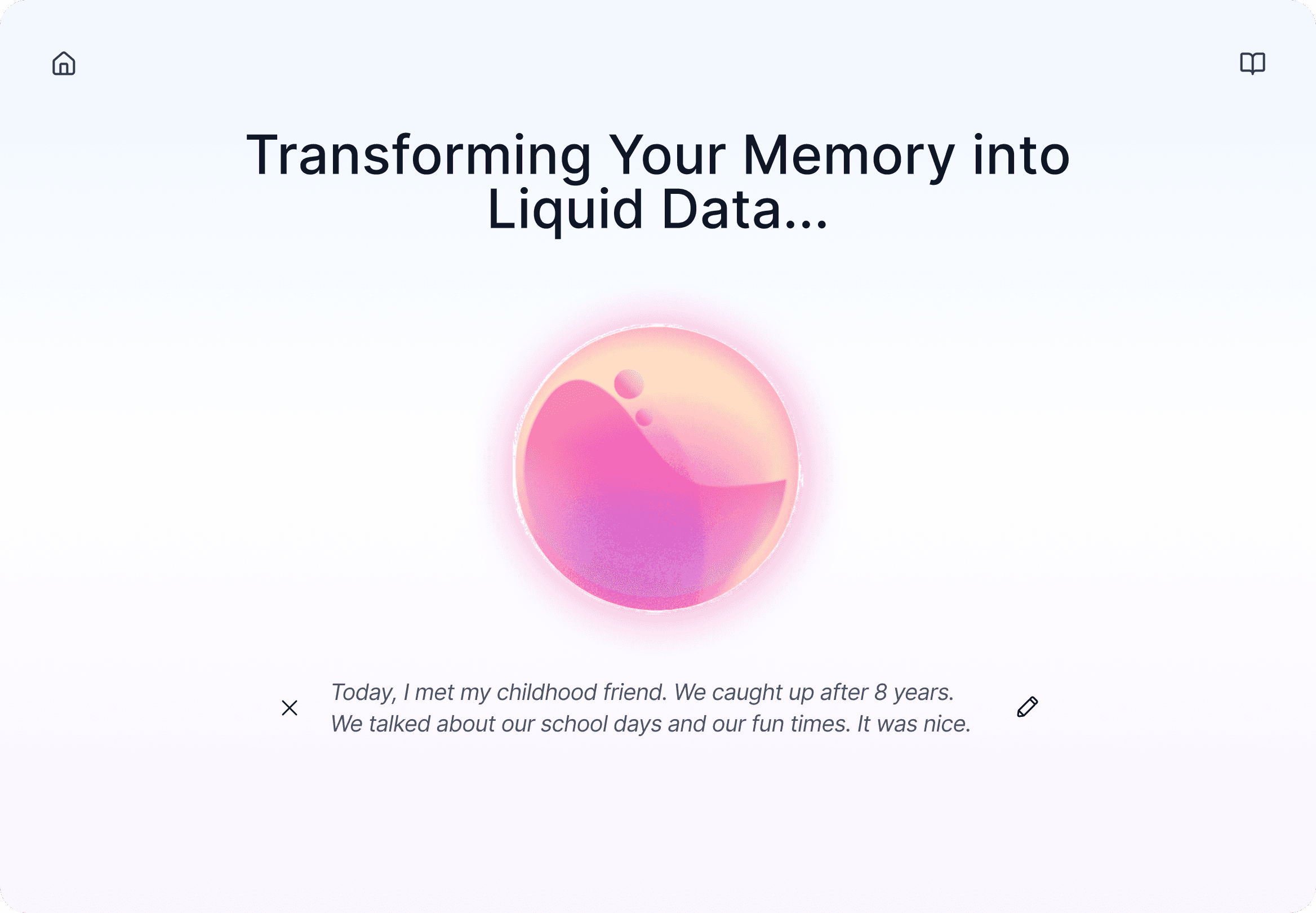
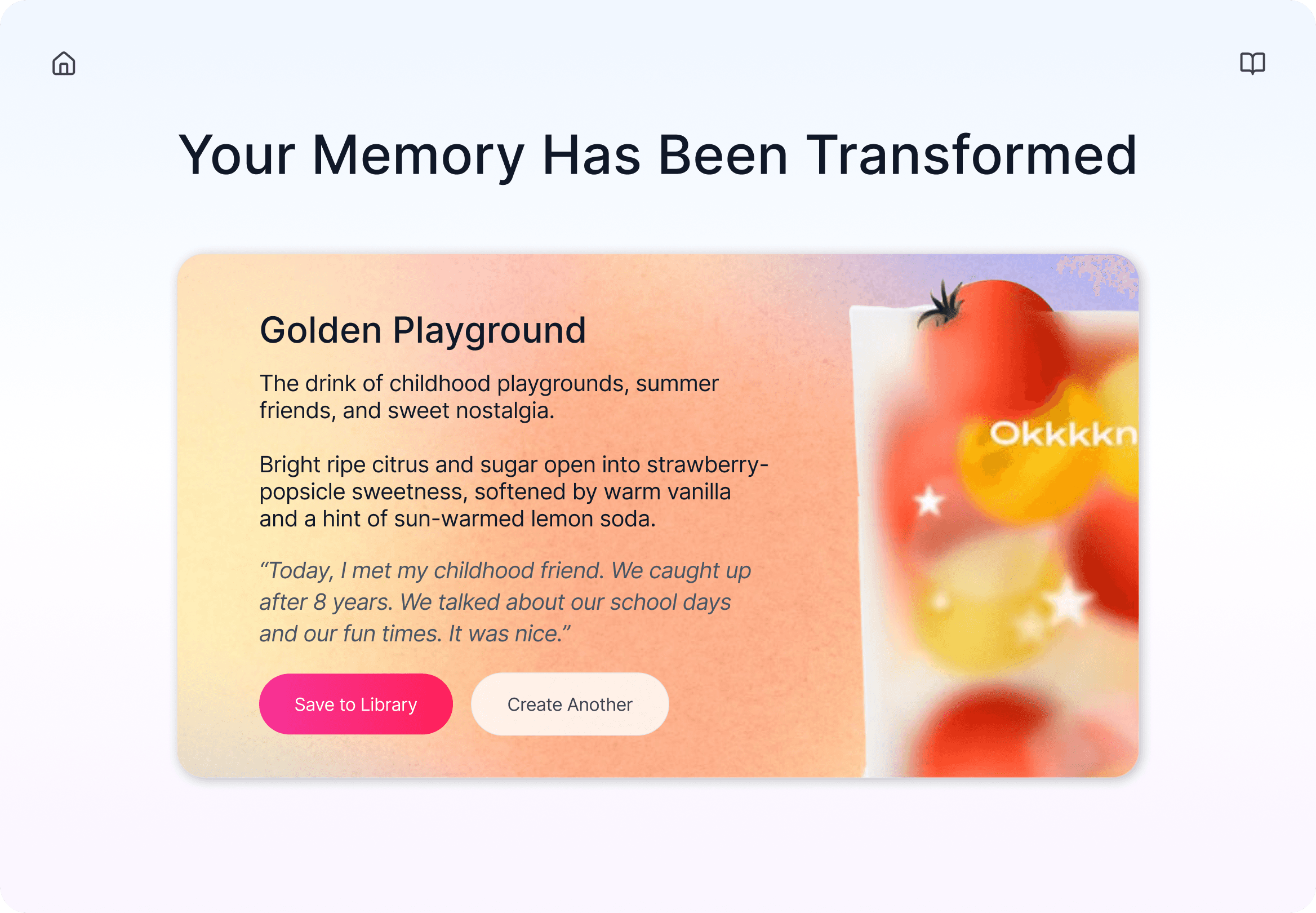
The liquid output is not an understanding of the memory, but a structuring of an abstract input
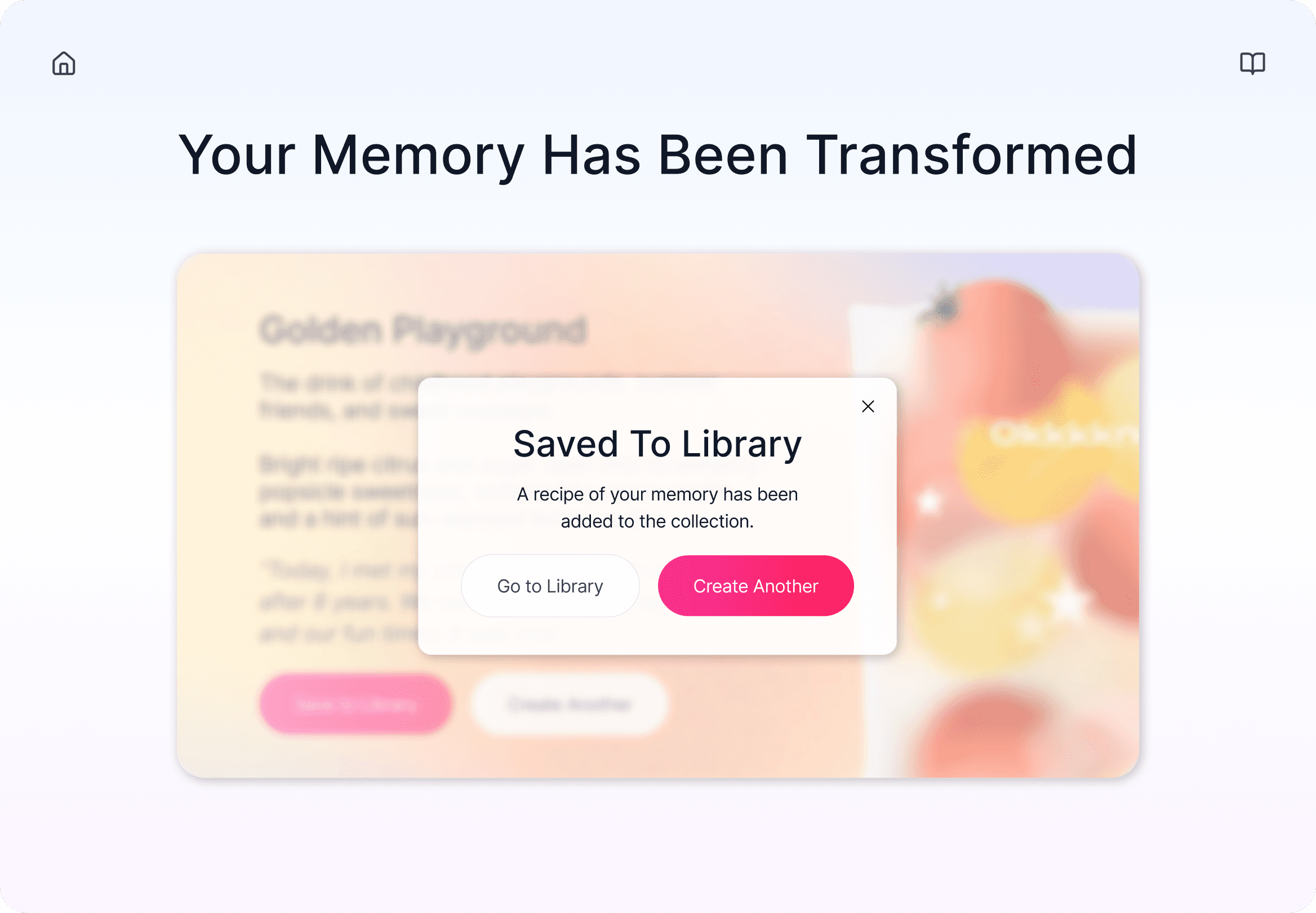
Provides users control towards what data gets saved for strong agency and more trust
Non-diagnostic labeling to prevent emotional over-attachment to AI
Agency to edit response or exit process for user control
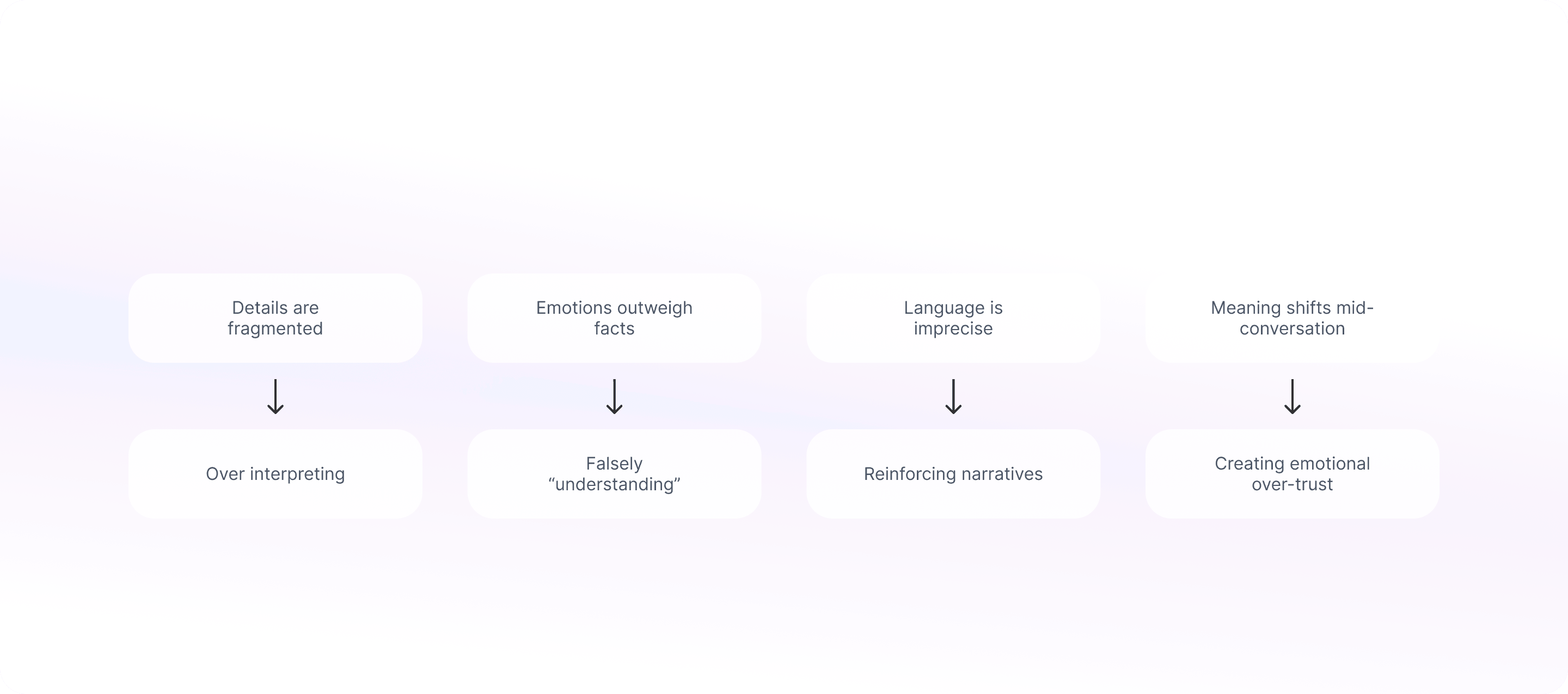
Core Problem When Users Describe Memories + Interface Risks
Riddhi Kasar
© All rights reserved 2025